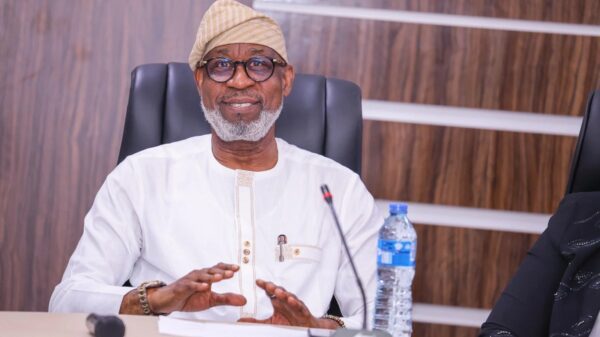
























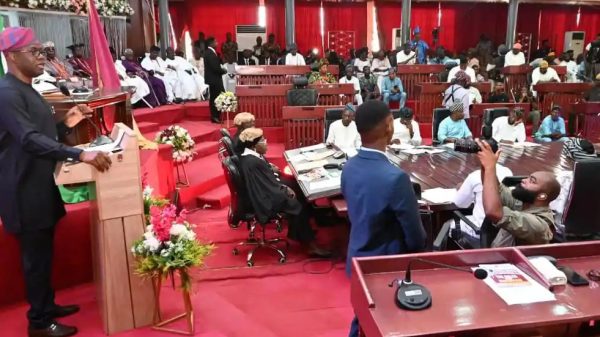







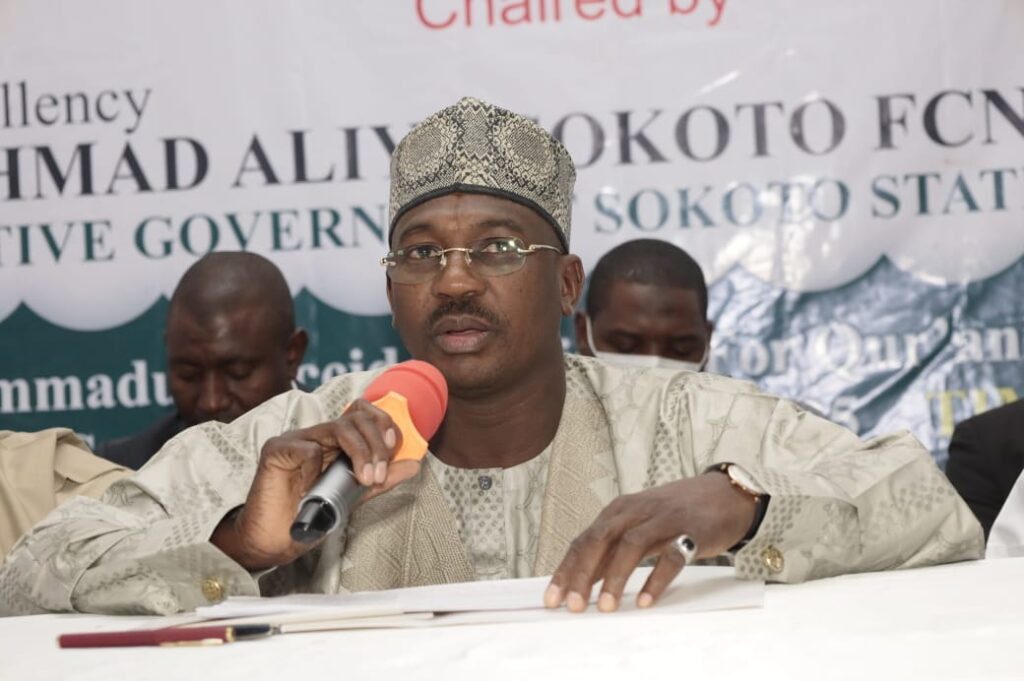
Governor Ahmed Aliyu of Sokoto State led a one-day Citizen Town Hall Budget Discussion on Sunday, held at the Sultan Maccido Institute in Sokoto. Organized by the Ministry of Budget and Economic Planning in partnership with UNICEF, the event brought together community members, civil society organizations, youth and women’s groups, and representatives of the private sector to provide input on the 2026 budget proposal.
Governor Aliyu emphasized that the 2026 budget would be implemented with full citizen participation, describing it as an inclusive and transformative fiscal plan. He highlighted transparency, data-driven governance, and public engagement as central to the administration’s approach. “I stand before you today not as a distant administrator, but as a partner, a listener, and a servant-leader,” he said, adding that the meeting was an opportunity to co-create the state’s future.
The governor outlined four priority pillars for the budget: Economic Expansion and Job Creation, Human Capital Development, Infrastructure and Sustainable Environment, and Security and Social Harmony. He thanked attendees for their contributions, noting pressing community needs such as water supply, Primary Health Centres, and feeder roads. He also recognized input from the private sector, civil society organizations, youth groups, and women’s associations.
Commissioner for Budget and Economic Planning, Dr. Abubakar Mohammad Zayyanna, explained that the town hall aligns with global best practices in fiscal governance and reflects the governor’s commitment to citizen-driven policy formulation. He noted that the consultations, conducted across the state’s three senatorial zones, marked the first initiative of its kind in Sokoto’s history.
Dr. Zayyanna added that over the past two and a half years, the administration has introduced structural reforms aimed at improving productivity and fostering sustainable growth. He described the town hall series as a key platform for stakeholders to discuss the budget and provide input for the state’s accelerated development. He also stressed that participatory budgeting promotes equity, prevents social exclusion, and builds public trust while aligning Sokoto with national and international governance standards.
Representing the Sultan of Sokoto, the District Head of Wurno, Alhaji Kabir Alhassan, praised the government’s ongoing investments in roads, schools, and primary healthcare. He called for the proposed new minimum wage to extend to traditional rulers, noting that stagnant allowances were placing financial strain on palace staff and district heads.