




















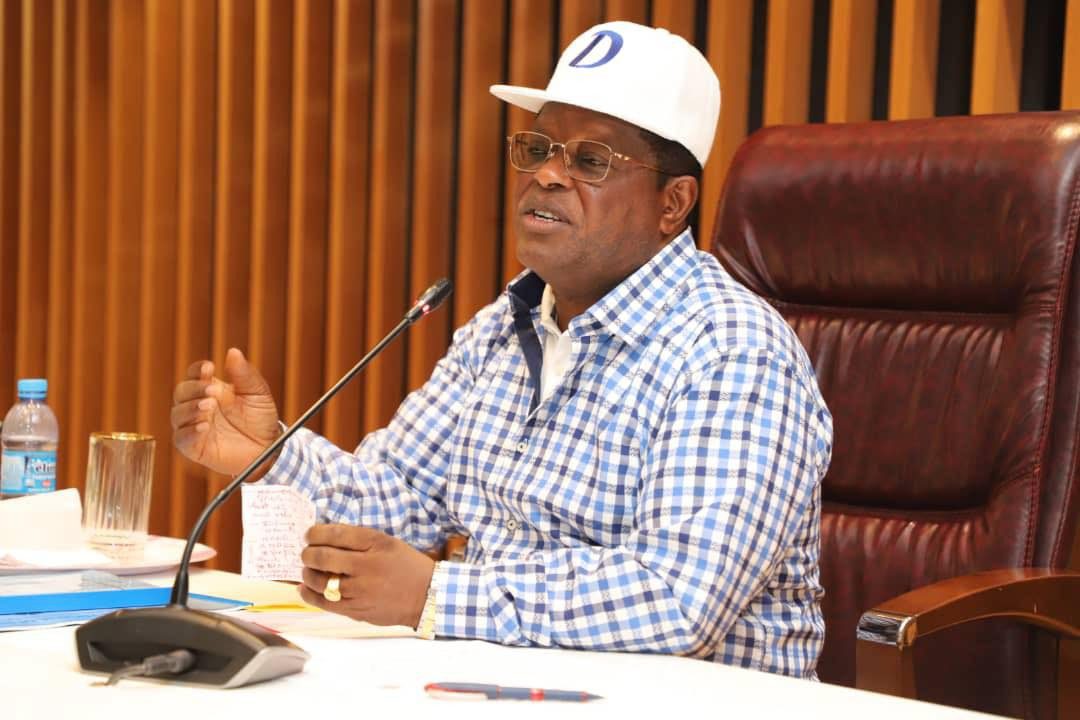
Minister of Works, Senator David Umahi, has declared that the ambitious superhighway projects currently being rolled out by President Bola Tinubu are set to become major catalysts for economic growth across the South East. During an extensive inspection tour of various federal infrastructure sites in Ebonyi State—covering a network of roads, flyovers, and bridges—the Minister emphasized that the administration is systematically tackling the region’s long-standing infrastructure decay.
Speaking on the progress of the Trans-Sahara road project, Umahi lauded the resilience of local firms. He noted that indigenous contractors have demonstrated remarkable capacity, often moving forward with construction even before receiving mobilization payments. According to the Minister, these local partners have shown a level of commitment that rivals and often exceeds that of expatriate firms, who he suggested can be more reactive to external political shifts. For Umahi, this shift toward local expertise is a fulfillment of the President’s vision for national self-reliance.
Details shared with Reports highlight the sheer scale of the project. The first section, spanning over 125 kilometers, is part of a massive 465-kilometer corridor that aims to link the South East to the North, eventually connecting to Abuja and extending further into the North East. The Minister highlighted the use of the Engineering, Procurement, Construction, and Finance (EPC+F) model, where the federal government covers 30 percent of the costs, while the contractors handle the remaining 70 percent through financing.
The infrastructure plan extends well beyond mere asphalt. Umahi revealed that these routes are designed as “economic development corridors.” The government plans to acquire land along these highways to foster the growth of industrial clusters, housing estates, and tourism centers. Furthermore, these roads will be equipped with modern amenities, including solar-powered lighting, CCTV surveillance, and specialized security monitoring, all managed under a tolling system designed to help contractors recover their investment while ensuring road longevity.
Umahi also provided updates on other critical regional arteries, such as the Second Niger Bridge Bypass and the Enugu–Onitsha Road. He emphasized the government’s shift toward concrete pavement, a move he believes is essential for durability, noting that the roads being built today are expected to last for a century without major maintenance. While the official timeline for completion is 36 months, the Minister expressed optimism that the current pace of work could see these projects finished even sooner.
Reflecting on the impact of these developments, the Minister urged the people of the South East to maintain their support for the current administration, arguing that the President’s focus on infrastructure within his first few years has demonstrated a clear commitment to the region. As the construction fronts multiply and these strategic corridors begin to take shape, the government aims to create a seamless, high-quality transport network that will fundamentally reshape the nation’s economic landscape.