


























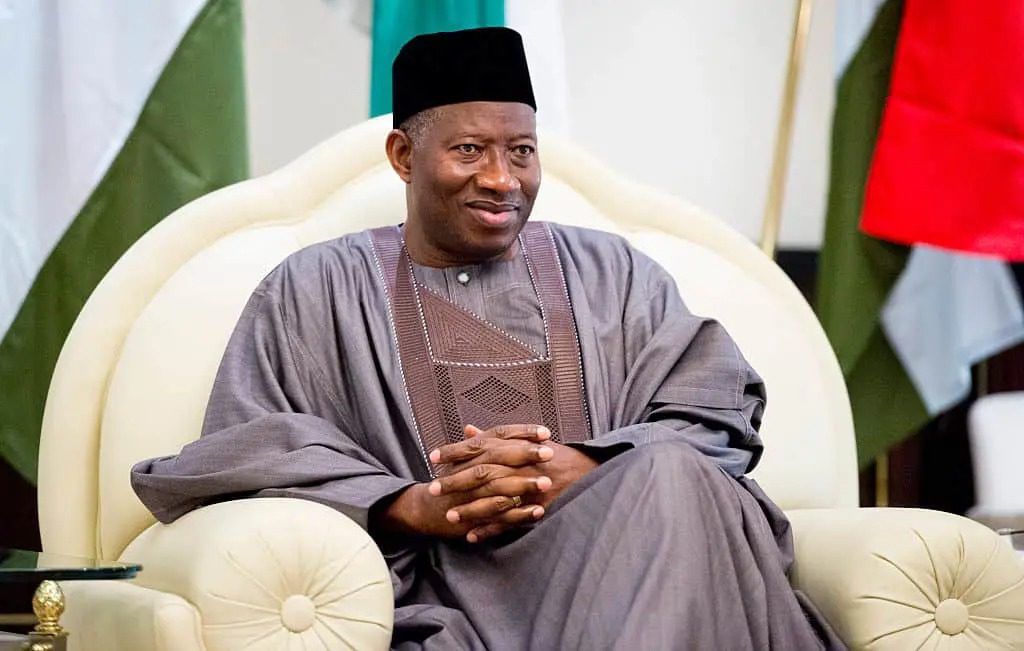
A fresh wave of controversy has swept through Nigeria’s political space as arguments intensify over whether former President Goodluck Jonathan can legally contest the 2027 presidential election.
While his loyalists insist he remains the most credible figure to restore stability and direction to the country, critics argue that constitutional term limits bar him, since he has already taken the presidential oath twice.
This week, the presidency dismissed speculations around Jonathan’s possible return, warning that those urging him on were merely “cheerleaders” seeking political, ethnic, or personal advantage. Presidential aide Bayo Onanuga stressed that only the courts could settle the matter:
“Jonathan will have his date in court. The jury will decide if he meets constitutional requirements and whether he can lawfully be sworn in for a third term,” he said.
But Jonathan’s allies are not backing down. Speaking on a podcast, Ambassador Josephine Washima, a former adviser, described calls for his return as noble, arguing that many Nigerians now recognize his achievements after years of what she described as propaganda.
“Nigerians can see the truth today. What they once dismissed as failures were, in fact, deliberate reforms and efforts to stabilize the country. That is why people now want him back,” she said.
She also pointed to a 2018 Federal High Court ruling in Bayelsa, which, in her view, cleared Jonathan of any constitutional barrier to contesting again.
In the same vein, Hon. Yahya Ability, outgoing PDP vice chairman in Niger State, argued that Jonathan is the most acceptable candidate from the South if the PDP sticks to its zoning arrangement. “He has only four years left, and it is fair that he completes that circle,” he noted.
Legal experts remain sharply divided. Constitutional lawyer Barrister Yusuf Mutumbi explained that Jonathan’s first swearing-in in 2010 was only to complete late President Umaru Musa Yar’Adua’s tenure, not a fresh mandate. “By law, his first elected term began in 2011. Constitutionally, he can still run one more time,” he said.
However, Mutumbi acknowledged that the 2018 constitutional amendment introduced new complications. Section 137(3) bars anyone sworn in twice as president from contesting again, but he insisted the law is not retroactive and does not apply to Jonathan.
Another lawyer, Barrister Abba Hikima, told BBC Hausa that the debate is far from settled. “The question of retroactivity is still open. Unless the law clearly states it applies backward, it should not,” he said, adding that only the Supreme Court could issue a definitive ruling.
Beyond the courtroom, political observers warn that Jonathan faces a tougher battle on the ground. Bayelsa-based analyst David West said his return could reshape the 2027 race but also carries risks.
“Jonathan is respected, but Nigeria’s politics has changed. The system is heavily monetised, and the PDP is weak. If he contests and loses, it could hurt his legacy,” West cautioned.
Still, momentum for his return is building, particularly from northern blocs seeking to unseat President Bola Ahmed Tinubu. Figures such as former Jigawa Governor Sule Lamido and Bauchi State Governor Bala Mohammed have openly encouraged Jonathan to run. Over the weekend, former Information Minister Jerry Gana declared that Jonathan would contest and defeat the APC in 2027.
Jonathan’s recent visit to African Democratic Congress (ADC) National Chairman Senator David Mark has further fueled speculation. While ADC officials described the meeting as private, many believe it was linked to 2027 strategies, with whispers of Jonathan possibly running under a broader coalition.
Though he has yet to make any formal declaration, insiders say his eligibility which would limit him to a single four-year term makes him an appealing compromise candidate in the North-South power balance debate.
For now, the arguments rage on. Whether in courtrooms, political gatherings, or among everyday Nigerians, the question of Jonathan’s return has already become one of the defining conversations ahead of 2027.