






































The Omenuko Bridge, which spans the Igwu River in Abia State, was for decades far more than a simple crossing point; it was a site of profound anxiety. For the people of Abam and the many commuters who relied on it, the narrow structure stood as a grim gatekeeper. Mothers crossed it with whispered prayers, and drivers gripped their wheels in silence, knowing that the bridge had become a symbol of tragedy rather than a gateway to progress.
The history of the bridge is stained by heartbreak. Many still remember the dark day in 2007 when a bus carrying 17 students on their way to sit for their university entrance exams plunged into the river. None survived. The waters claimed their dreams, just as they would later claim others, including travelers like Mr. Maxwell Uduma and his wife. Even as recently as December 2024, eight people traveling for the Christmas holidays lost their lives at the same spot. Beyond the statistics, the bridge was a stinging reminder of administrative neglect.
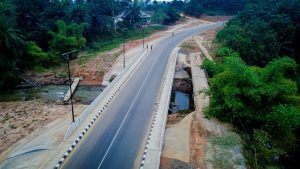
However, the narrative has taken a dramatic turn. Reports can report that the fear that once haunted the Igwu River has been replaced by a sense of profound relief. Where sirens and cries of grief once echoed, the community recently gathered in a massive show of celebration to witness the inauguration of a brand-new Omenuko Bridge. Built to be wider and safer, the structure was delivered by Governor Alex Otti just six months after the project was flagged off.
This intervention is more than just a repair job; it is a total overhaul of the region’s economic potential. Alongside the bridge, the 30-kilometre Abam–Ndioji–Ndiokereke–Arochukwu road has been rehabilitated, effectively opening up one of Abia State’s most vital food baskets. The Abam Onyerubi clan, known for its massive production of rice, palm oil, cassava, and rubber, finally has a reliable route to get its produce to urban markets.
The history of this crossing is as deep as the river itself. Local tradition, as shared by Eze Evangelist Ogbuka Origa, traces the route back over a century to a simple wooden log laid by the clan’s patriarch. By 1959, a concrete bridge was built under the administration of Michael Okpara, but it eventually outlived its safety limits. For years, residents watched as successive governments made empty promises, sometimes even claiming to have commissioned projects that didn’t exist on the ground.
The economic impact is already being felt. Farmers who previously watched their harvests rot due to inaccessible roads are now seeing traders drive directly to their doorsteps. Lady Nne Oriona Ukaike Ukeh, President of the Inyom Abam Development Union, noted that this change would directly improve the lives of families, making it easier for them to fund their children’s education. The old saying that “there is no short route to Arochukwu” has finally been retired.
During the commissioning, Governor Otti spoke with a sense of justice, framing the project as a long-overdue debt to the people. He paid a solemn tribute to those who lost their lives to the bridge’s former state, acknowledging that while the “jinx is broken,” the memory of those lost must remain a reminder of why good governance is essential.
For the people of Abam, the reconstruction of the Omenuko Bridge is a clear sign that the era of being forgotten is over. The bridge is no longer a death trap; it is once again a landmark of history and a path to a more prosperous future.