






















Ecuador has announced sweeping new trade measures against Colombia, unveiling a 30 percent tariff on imports from its neighbour over what it describes as a lack of cooperation in the fight against drug trafficking.
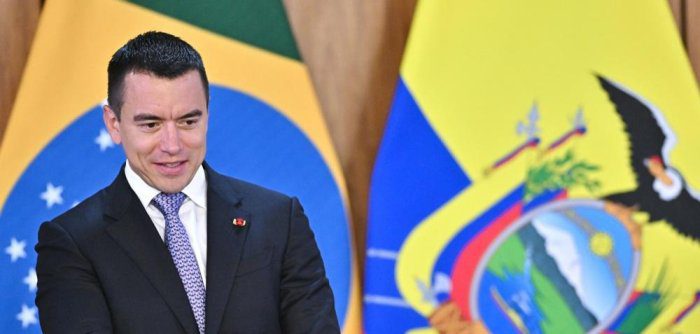
President Daniel Noboa made the announcement on Wednesday, saying the decision was driven by growing frustration over cross-border criminal activity linked to narcotics and illegal mining. The tariffs are scheduled to take effect from February 1.
Speaking via his official channels, Noboa said Ecuador had repeatedly sought cooperation, despite running a trade deficit of more than one billion dollars annually with Colombia. According to him, Ecuadorian security forces continue to confront drug-related criminal groups along the border without meaningful support from the Colombian side.
The president, who was in Switzerland attending the World Economic Forum in Davos at the time, said the tariffs would stay in place until there is what he called a genuine and coordinated commitment to tackling drug trafficking and illegal mining along the shared border.
Ecuador’s Interior Minister, John Reimberg, reinforced the government’s stance in Quito, accusing Colombian authorities of failing to take effective action against the cultivation, processing, and movement of drugs into Ecuadorian territory.
Colombia responded by pushing back against the accusations. President Gustavo Petro said significant progress had been made, noting that more than 200 tonnes of cocaine had been seized along the Ecuador border. Defence Minister Pedro Sanchez also insisted that both countries maintain long-standing cooperation in efforts to curb drug trafficking.
The dispute comes as Ecuador grapples with a sharp rise in violence. Once considered one of South America’s safest nations, the country has rapidly become a major transit point in the global cocaine trade, with criminal gangs linked to powerful cartels operating across the region. By the end of 2025, Ecuador recorded a homicide rate of 52 per 100,000 people, translating to roughly one killing every hour.
Its 600-kilometre border with Colombia, stretching from the Pacific coast to the Amazon rainforest, remains highly porous, dotted with illegal routes commonly used for smuggling.
Noboa has previously floated the idea of allowing foreign military bases on Ecuadorian soil as part of a broader security strategy, though the proposal was rejected in a national referendum last November. Shortly after that vote, the United States announced a temporary deployment of Air Force personnel to support Ecuador’s anti-narcotics operations.
The new tariffs signal a tougher stance from Quito as it seeks to pressure its neighbour while confronting an escalating security crisis at home.