






























The Middle East is once again on high alert as military movements and intelligence leaks fuel speculation that Washington could be preparing for a new strike on Iran. What began as whispers of routine redeployments is now being seen by analysts as the groundwork for another round of confrontation.
Reports circulating online noted that dozens of US fighter jets and refuelling aircraft were recently shifted eastward, many arriving at Al-Udeid Airbase in Qatar, the largest American military hub in the region. Tracking data also revealed tankers and jets moving through European airbases before heading to the Gulf. Security insiders described the scale of the mobilization as anything but routine, suggesting it signals readiness for either retaliation or pre-emptive action.
In London, unnamed officials within the British Defence Ministry hinted the buildup carried “sinister” implications, while regional experts recalled that similar deployments in the past often preceded major strikes. Behnam Taleblu, a senior analyst at the Foundation for Defence of Democracies, pointed to Operation Midnight Hammer under the Trump administration, when disinformation masked the movement of B-2 bombers before they struck Iranian sites. Trump, he reminded, remains the only US president in decades to order direct strikes on Iranian nuclear facilities.
Pentagon Playbook and Intelligence Network
For years, the US Central Command (USCENTCOM) has treated Iran as its principal adversary, dedicating billions annually to monitoring and countering Tehran’s activities. In 2025, nearly 40 percent of its $143 billion budget was tied to Iran-related operations, ranging from intelligence gathering to war-gaming potential strikes. Farsi-speaking analysts on the Iran desk have developed extensive contingency plans now believed to be coming into play.
Behind these moves is an intelligence machine that stretches deep into Iran’s political, military, and business elite. Some CIA contacts reportedly date back to the era of the Shah. These networks provided Washington with advanced insights during recent secret negotiations, revealing internal disputes among Iranian leaders before talks broke down. Those same assets also played a role in enabling the precision strikes of Operation Midnight Hammer.
Diplomacy Stalled, Military Options Reopen
This year, Washington and Tehran had been engaged in backchannel diplomacy hosted in Oman and later in Rome. Talks came close to producing a breakthrough until the US hardened its stance, demanding a total shutdown of Iran’s enrichment program—a nonstarter for Tehran. After that, negotiations collapsed, Israel launched its own operation, and the US followed with coordinated strikes.
The Trump administration has framed the pressure campaign as “Peace Through Strength.” Secretary of State Marco Rubio warned Iran that any retaliation would endanger the regime itself, framing survival as a bargaining chip. The G7 later declared Iran must never obtain a nuclear weapon, though European allies quietly urged restraint as the crisis escalated.
Alliances, Sanctions, and Qatar’s Shield
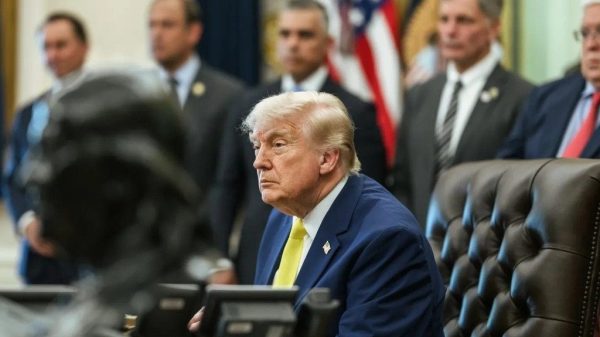
Amid the rising tensions, President Trump signed an executive order pledging that any attack on Qatar would be treated as an attack on the United States. The move was widely interpreted as a warning to Iran and its proxies, given the strategic importance of Al-Udeid Airbase. It also followed an awkward exchange in which Israeli airstrikes endangered Qatari assets, prompting Prime Minister Netanyahu to place an apology call to the Emir of Qatar.
At the same time, the United Nations Security Council reimposed sweeping sanctions on Iran after rejecting a Russian-Chinese bid to delay enforcement. The measures reinstated the arms embargo, froze assets tied to nuclear and missile programs, restricted Iranian oil exports, and imposed travel bans on senior officials. Western powers accused Tehran of enriching uranium far beyond civilian levels, prompting Iran to recall ambassadors and threaten to cut ties with the International Atomic Energy Agency.
Strategic Balance and the Road Ahead
The US response is not built on airpower alone. A vast “Forward Shield” infrastructure, with tens of thousands of troops and pre-positioned equipment across the Gulf, underpins its deterrence. Israel supplies unmatched intelligence and cyber operations, while Gulf Arab states quietly provide bases and airspace access, even as they publicly call for de-escalation.
For now, Washington’s moves could still be part of a high-stakes diplomatic bluff. But with warplanes landing, sanctions snapping back, and alliances being tested, the margin for error is shrinking—and the risk of a fresh military clash is growing by the day.