





















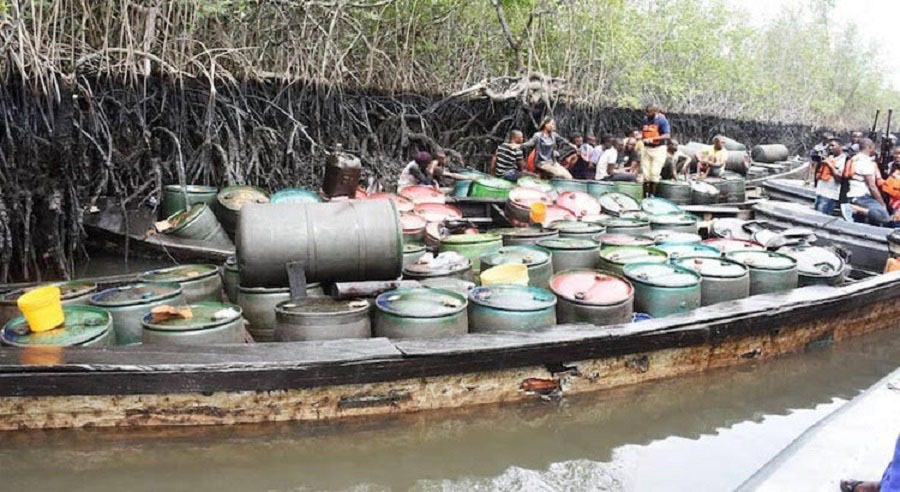
For years, Nigeria’s battle with oil theft was fought in the deep, tangled mangroves and isolated creeks of the Niger Delta. But a new and more troubling reality is emerging. Security reports indicate that criminal networks are migrating inland, weaving their illicit operations into the fabric of everyday civilian life, busy markets, and major transport routes.
A striking example of this shift was recently uncovered at the Owaza Mami Market in Abia State. To anyone driving along the Port Harcourt-Aba Expressway, it looked like a typical roadside trading hub. However, an intelligence-led raid on January 24, 2026, by Pipeline Infrastructure Nigeria Limited (PINL) and government security forces revealed a sophisticated bunkering headquarters hidden in plain sight.
The operation at Owaza uncovered warehouses packed with stolen crude, generators modified to run on unrefined oil, and active artisanal refining equipment. This isn’t an isolated case. Similar patterns are being reported across Rivers, Imo, and Delta states. By moving closer to population centers and highways, these networks drastically cut their logistics costs and gain immediate access to buyers, while simultaneously making it much harder for security forces to intervene without risking civilian lives.
This migration points to a high level of advanced planning. Investigators noted that during the Owaza raid, suspects utilized pre-planned escape routes and local intelligence to evade capture. These are no longer just opportunistic crimes committed by desperate individuals; they are layered, organized operations that blend seamlessly into legitimate economic spaces like hotels, residential compounds, and warehouses.
The economic and environmental consequences are devastating. Beyond the billions of dollars in lost national revenue, these inland “mini-refineries” are ticking time bombs for public health. Waste is often dumped directly into local soil and waterways, poisoning farmlands that communities rely on for food.
While the use of private surveillance firms like PINL has helped dismantle some of these hubs, experts who spoke with Reports warn that raids are only a temporary fix. Without a focus on prosecuting the kingpins, permanently closing escape corridors, and providing real economic alternatives for the host communities, these criminal networks will likely just resurface in the next town over.
The exposure of hubs like the Owaza Mami Market serves as a sobering reminder that oil theft is no longer a “distant” problem happening in a swamp somewhere. It has moved next door, operating under the cover of routine commerce and making the fight for Nigeria’s resources more complex than ever before.