





















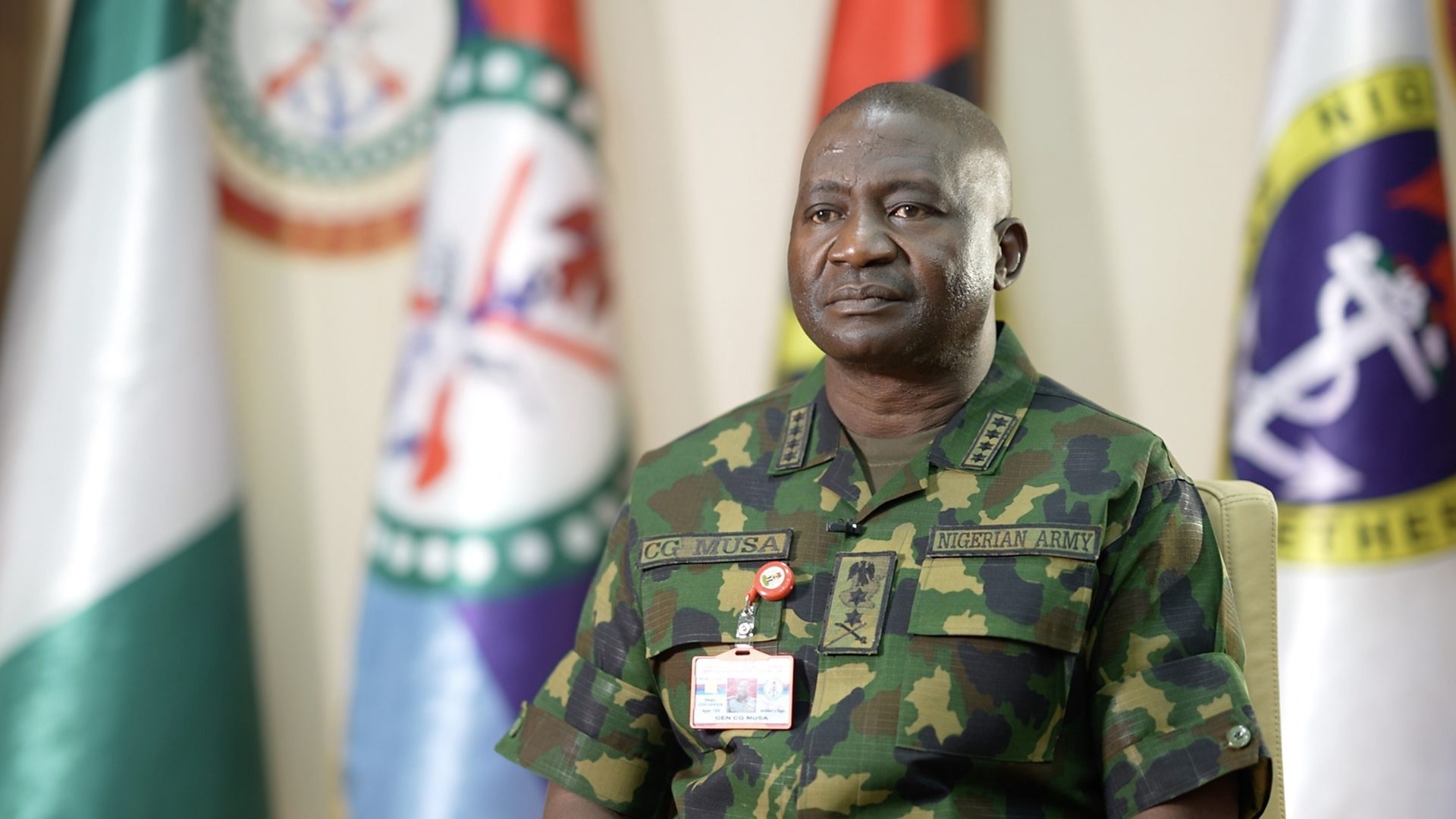
The announcement of General Musa as the new Minister of Defence, barely five weeks after his retirement as Chief of Defence Staff (CDS) on October 30th, has sparked significant discussion. His appointment was confirmed hours after the previous minister, Mohammed Badaru Abubakar, who had served since 2023, reportedly ‘resigned’ on Monday. The rapid turnaround has prompted questions regarding the precise motivation behind President Tinubu’s decision to bring the recently retired military chief back into government.
A credible source close to the Presidency revealed that the idea originated from influential ministers within the cabinet. They strongly suggested the need for a Minister of Defence with a solid military background and firsthand, extensive knowledge of the complex security challenges currently plaguing Nigeria.
Endorsements and Capacity: Why Musa Was the Choice
Retired Brigadier General Mohammed Kabir Galadanchi, contacted for comment, expressed absolute confidence in General Musa’s capacity to support the President in addressing the nation’s security woes. He emphasized that the role demanded “somebody who has understanding of the military in itself and its operation to help the president in executing most of the policies in dealing with this issue.” Galadanchi pointed out that Musa’s career has been intrinsically linked to the unbiased processes of resolving these problems.
Highlighting Musa’s stellar career trajectory, Galadanchi recalled that he served as Commandant of the Nigerian Army Depot, where soldiers are trained for operations, before going on to be a Theater Commander, General Officer Commanding, and eventually the Chief of Defence Staff. With such a résumé, Galadanchi believes Musa is fully equipped to perform. He added a crucial point on synergy: the current Service Chiefs have all served as subordinates under Musa, ensuring a high level of understanding and seamless cooperation under his ministerial review.
Yushau A. Shuaib, Editor-in-Chief of PRNigeria, also lent his voice to the endorsement, noting that General Musa distinguished himself by championing effective inter-agency collaboration across all security arms, as well as with neighbouring nations during his tenure as Head of ECOWAS Military Chiefs. Shuaib praised Musa’s “exemplary, decisive, yet compassionate leadership” demonstrated as Theatre Commander, where he relentlessly pursued terrorist leaders while simultaneously implementing non-kinetic strategies that led to the mass surrender of vulnerable groups for rehabilitation.
Shuaib further stressed Musa’s status as a respected unifier: “He is widely respected across diverse communities and theatres of operation, particularly in Northern Nigeria, by both Muslims and Christians… In a time marked by ethno-religious sentiments, leaders like General Musa stand out as unifier who can foster national unity and brotherhood.” Should his confirmation succeed, Shuaib believes Musa is certain to maintain collaborative momentum and strengthen military operations and national cohesion.
Navigating Entrenched Challenges
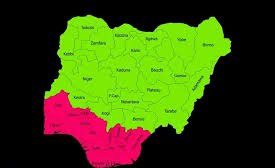
The new Minister will immediately face the daunting challenges of increasing insecurity in the North West, the persistent Boko Haram insurgency in the North East, and rising terrorism in the North Central. Additionally, cases of abductions have surged in the South-South states of Edo and Delta, as well as parts of the South West.
Fortunately, as the senior officer to all the current Service Chiefs, Musa is expected to enjoy a positive working relationship without any institutional clashes. However, the true challenge, as articulated by Galadanchi, is a “leadership challenge.” The Ministry of Defence has long-standing, entrenched practices, and since many personnel “are used to a certain way of doing things,” the Minister “might have a very big challenge in that area.” To overcome this inertia, Galadanchi suggested the introduction of “new people that will have new ideas” and the formation of an advisory “committee of retired senior officers” with extensive command experience.
Another commentator explained that General Musa is bound to make a tangible difference because the statutory powers of a Minister are vastly different from those of the CDS. He possesses the necessary goodwill from all the Service Chiefs and troops, ensuring they will listen to him. Furthermore, having recently served as a field commander in the North East and Commander of the Infantry Corps (which accounts for over 70% of the army), he is unlikely to be misled by operational reports.
Musa’s Place in History and Unfulfilled Vows
General Musa will be the 13th person to occupy the Defence Minister portfolio in the current democratic era and the sixth army officer to do so since 1999. He follows in the footsteps of figures like Generals Theophilus Danjuma, Aliyu Gusau, and Mansur Mohammed Dan Ali. The portfolio has seen a mix of military and civilian appointments, though the trend leaned towards civilians like Rabiu Musa Kwankwaso under President Obasanjo (a move seen as political) and Yayale Ahmed under Umaru Yar’adua, until the rise of intractable insurgency issues around 2009 necessitated the appointment of men with military experience, such as Godwin Abbe.
General Musa, 58, served as Chief of Defence Staff from 2023 until October 2025 and is a decorated soldier, having won the prestigious Colin Powell Award for Soldiering in 2012. Born in Sokoto in 1967, he received extensive education, culminating in a Bachelor of Science degree from the Nigerian Defence Academy in 1991. His career highlights include serving as Theatre Commander of Operation Hadin Kai and Commander of Sector 3 Multinational Joint Task Force in the Lake Chad Region.
However, his appointment is shadowed by unfulfilled promises. In September 2024, as CDS, General Musa vowed to capture Bello Turji, the notorious bandit kingpin in the North West, assuring the public that the military was “closing in.” Despite his confident pledge that they would get Turji “within the shortest possible time,” he left office in October without fulfilling that promise, a failure that also applies to his promise to end banditry across Zamfara and other parts of the North West, according to report